Sandalwood Mala with 108 Beads - from Namdroling Monastery Shop
Sandalwood Mala with 108 Beads - from Namdroling Monastery Shop
Low stock: 5 left
Couldn't load pickup availability
- Fast shipping from Switzerland
- Secure & encrypted payment
- Authentic origin

Kunsang
"When someone picks up a mala for the first time at our shop on Kramgasse, I often notice that their fingers automatically find the beads, almost as if by themselves. With this mala from the Namdroling Monastery shop, this happens particularly quickly – the warm, reddish-brown wood simply feels good in the hand."
Sandalwood Mala with 108 Beads from Namdroling
A small but important point that I often explain: "Sandalwood" is not always the same wood. Genuine, light sandalwood (Santalum album) is cream-colored and is mainly used for oils and incense due to its strong fragrance – today it is rare and strictly protected.
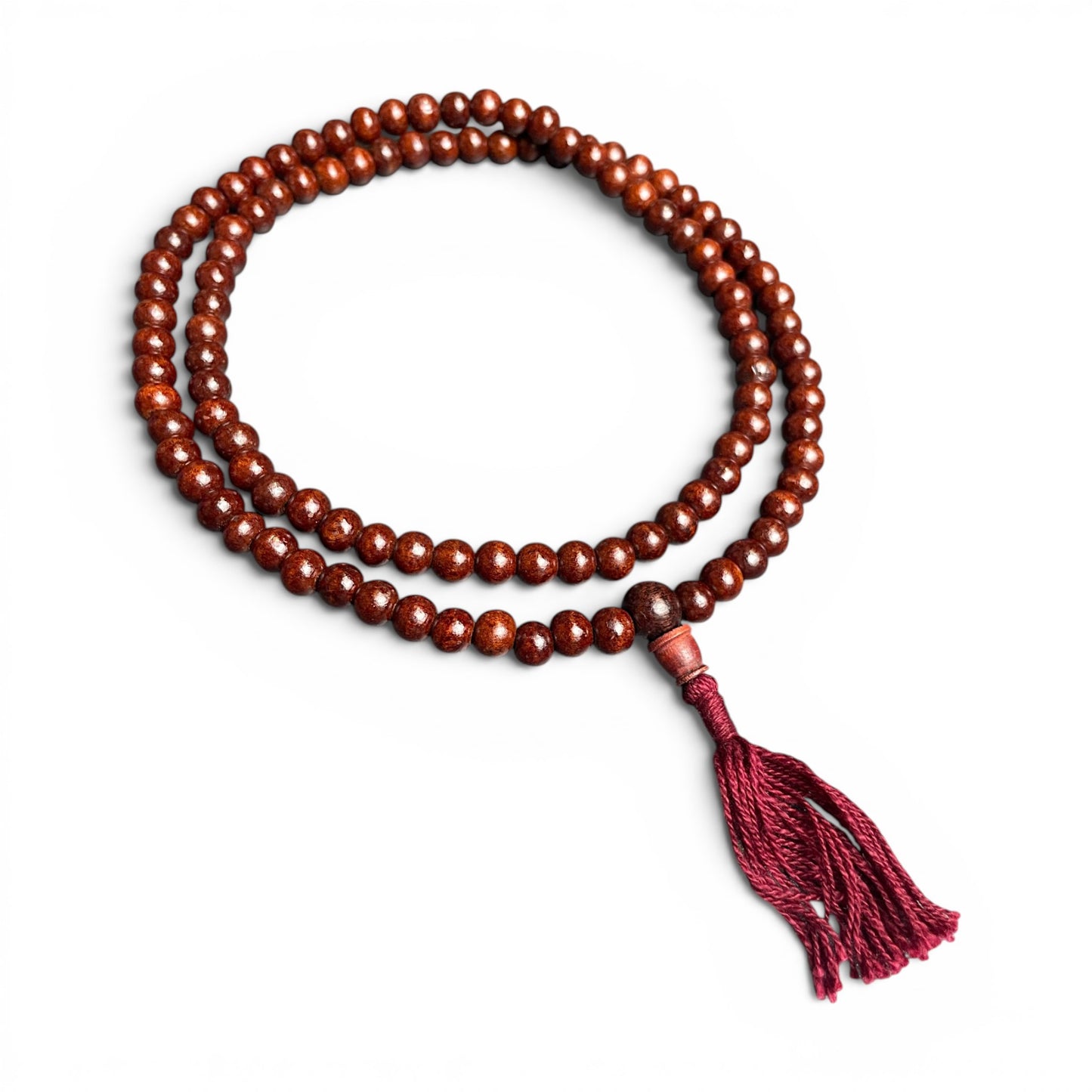
This mala is made of red sandalwood (Pterocarpus santalinus). You can recognize it by its rich, reddish-brown to chestnut hue and the fine grain, which varies slightly with each bead – no two pieces are exactly alike.
108 beads, a larger guru bead, and a multi-strand tassel in burgundy – the classic form. Weighing around 30 g, the mala can be wrapped several times around the wrist or worn as a longer mala around the neck.
Origin – From the Namdroling Monastery Shop
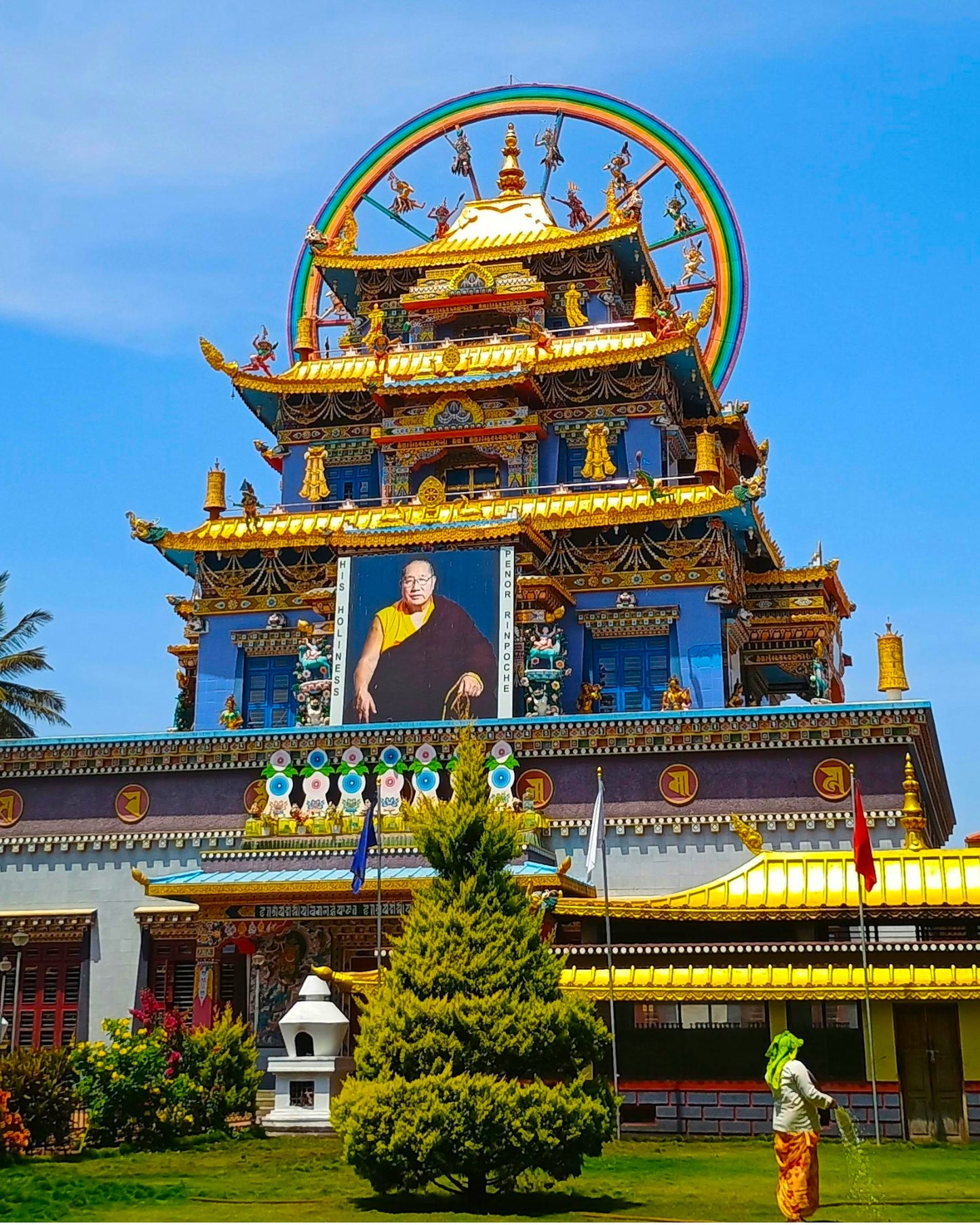
The Namdroling Monastery is located in Bylakuppe, South India, and is one of the largest monasteries of the Nyingma tradition in exile – also known as the "Golden Temple." There is a small shop directly on site, run by the monks themselves.
Pilgrims and visitors find incense, malas, books, and religious objects there – this mala comes precisely from this shop. The proceeds directly benefit the monastic community: the maintenance and education of the monks and nuns who live there.
Meaning & Tradition
A mala with 108 beads is a tool in Tibetan Buddhism for counting mantras – the most famous being OM MANI PADME HUM, the mantra of compassion. Each bead that moves between the fingers is a small repetition, a small moment of concentration.
What I particularly like about this mala is its color: This warm, earthy reddish-brown is reminiscent of roots, of something firmly connected to the ground. If someone comes to me feeling "ungrounded" – too much in their head, too little in their body – I often place exactly this mala in their hand.
Care & Use
- Storage: ideally in a traditional brocade pouch, protected from dust and direct sunlight
- Creams & Perfume: remove the mala briefly before applying – oils and fragrances can alter the surface
- Cleaning: a dry, soft cloth is sufficient – no water, no alcohol
- Daily use: a few rounds in the morning, a few conscious breaths – a good start to the day
It's best to see it for yourself – or come by Kramgasse 63, then you'll feel directly how warm the wood feels in your hand.